
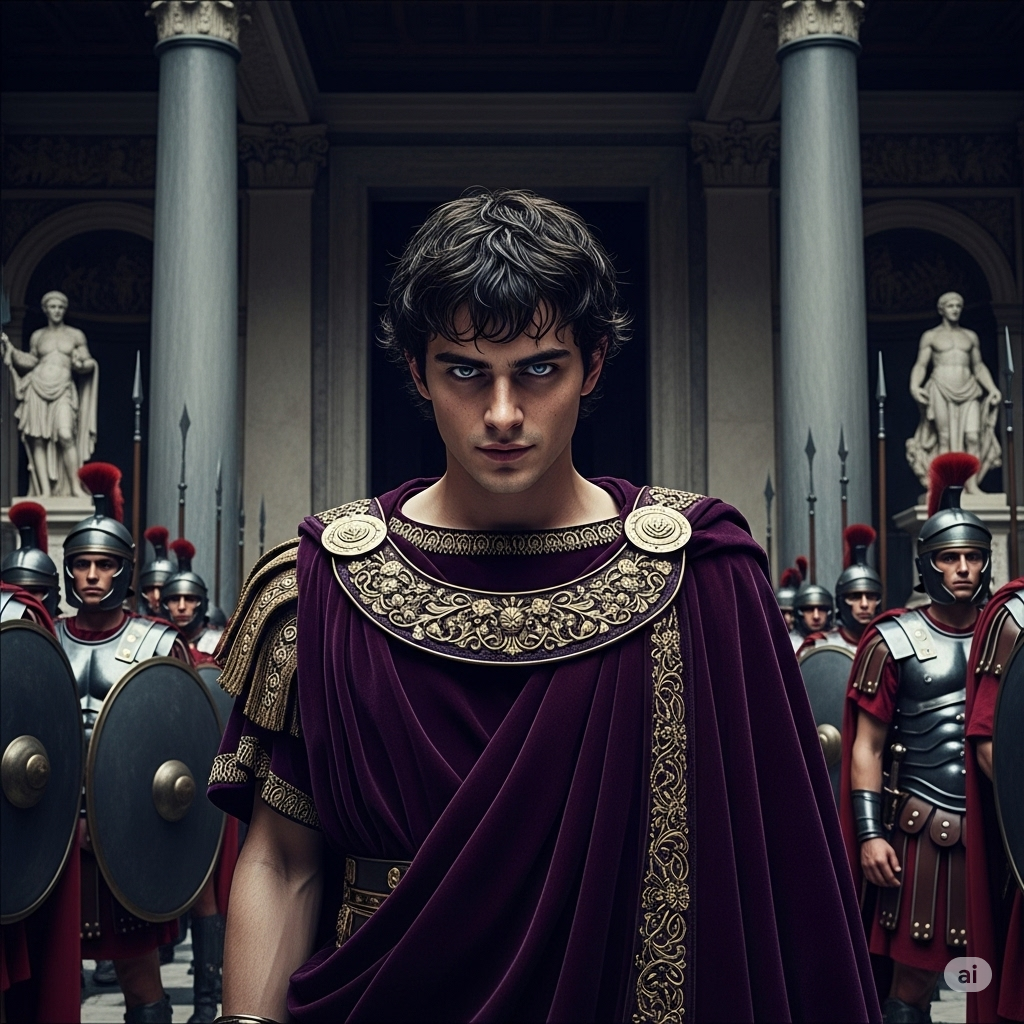
“The world, as it is, is unbearable. Therefore, I need the moon, or happiness, or immortality, something which might be crazy, but is from another world.”
Said by the character Caligula, the omnipotent ruler of ancient world, Emperor of Rome, in Albert Camus’s play of the same name.
“The world, as it is, is unbearable,” his powerful quote reflects the existential despair, the profound sense of disillusionment and the rejection of the absurd nature of human existence as he perceives it. He’s expressing a deep dissatisfaction with reality. He finds the human condition, with its limitations, suffering, banality, to be intolerable. As an emperor, he had immense power and wealth, yet even that couldn’t alleviate this inner torment.
The second part of the quote “Therefore, I need the moon, or happiness, or immortality, something which might be crazy, but is from another world” reveals his desperate longing for transcendence to “Another World” in search of qualities or states of being that are beyond the confines of ordinary human experience and the earthly realm.
“The moon” here symbolizes something divine, perfectly beautiful and pure something untouched by earthly imperfections. It represents an escape from the mundane and the flawed.
“Happiness” a state of perfect and lasting bliss that the “unbearable” world cannot provide. This suggests the search for supreme satisfaction that transcends earthly limitations.
“Immortality” This points to the desire to escape the most fundamental limitation of human existence: death. It is a rejection of finite life and its inherent decay and impermanence.
“Something which might be crazy, but is from another world” This acknowledges the irrationality of his desires from a conventional perspective. He knows these are not things one can simply acquire in this world, yet his need for them is so strong that he yearns for a reality where such things are possible. It’s a plea for a different order of existence, one that offers ultimate perfection, joy, or eternal being.
In essence, Caligula expresses the feeling that this world is not enough for him. He’s not just bored or sad; he considers the very essence of reality to be insufficient, flawed, and restrictive. He yearns for something absolute and perfect, something that lies beyond the material and the mortal. It’s a cry for a transcendent meaning or experience that the “unbearable” world cannot provide, which leads him to seek it in the realm of the impossible or the divine.
It is a sad feeling that resonates with many who feel a deep sense of dissatisfaction with the limitations and imperfections of life as we know it